YooshMD Blog
PCOS weight loss: How GLP-1 medications help restore hormonal balance
Discover how GLP-1 medications address insulin resistance and support PCOS weight loss by regulating hormones naturally.
PCOS weight loss is one of the most frustrating challenges in women’s metabolic health—not because patients aren’t trying, but because the underlying hormonal imbalance actively resists traditional diet and exercise alone. Polycystic ovary syndrome (PCOS) drives a cycle of insulin resistance, elevated androgens, and disrupted ovulation that makes standard approaches feel like pushing against a locked door. GLP-1 medications—originally developed for type 2 diabetes—offer a scientifically grounded way to break that cycle by targeting the root metabolic problem, improving insulin sensitivity, and supporting sustainable weight reduction.
Understanding PCOS and the insulin resistance cycle
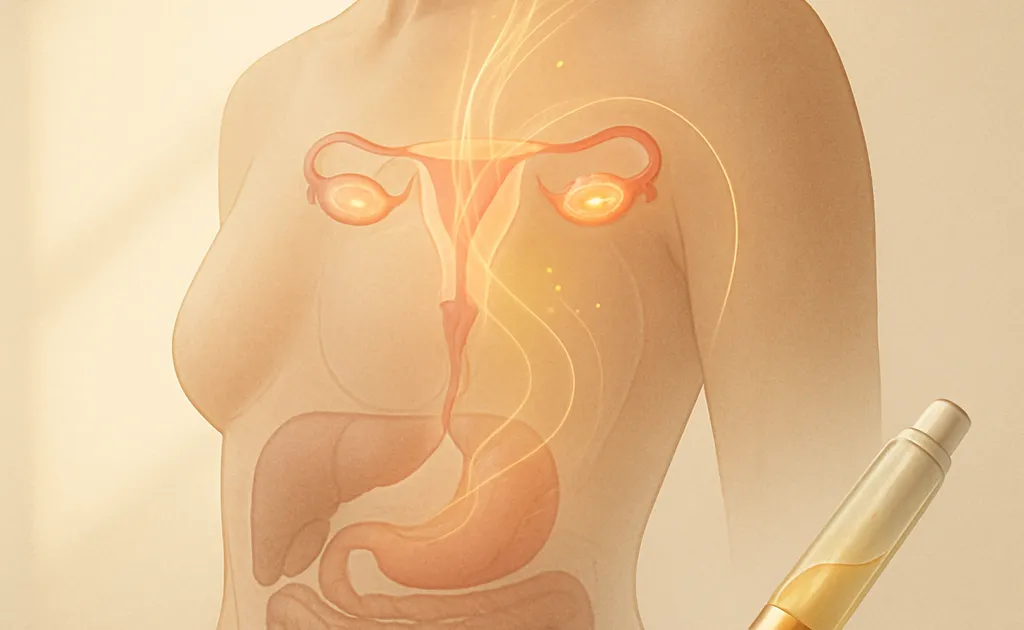
PCOS develops when the ovaries produce excess androgens (male hormones), disrupting ovulation and causing cysts to form. The metabolic driver behind most PCOS cases is insulin resistance: the body’s cells don’t respond well to insulin, so the pancreas overproduces it to compensate. That excess insulin fuels inflammation, worsens androgen production, and primes the body to store glucose rather than burn it.
Key facts about PCOS and metabolism:
- Up to 70% of people with PCOS have some degree of insulin resistance
- Insulin resistance directly increases androgen levels
- High androgens worsen ovulatory and metabolic dysfunction
- This cycle creates a “double barrier” to successful PCOS weight loss
Traditional approaches—calorie restriction, cardio, and willpower—often fall short because they don’t address the hormonal imbalance driving the problem.
How GLP-1 medications target PCOS at the hormonal level
GLP-1 (glucagon-like peptide-1) is a hormone the gut naturally produces after eating. GLP-1 medications mimic this hormone through multiple pathways simultaneously, making them particularly effective for PCOS weight loss.
Direct metabolic effects:
- Improve insulin sensitivity. GLP-1 medications enhance how the pancreas and liver respond to blood sugar, reducing excess insulin production.
- Slow gastric emptying. Food moves through the stomach more slowly, extending satiety and preventing rapid blood sugar spikes.
- Suppress appetite signals. GLP-1 acts on hunger centers in the brain, reducing the drive to eat and making calorie reduction feel less forced—and in my practice, what patients describe most often isn’t simply eating less, but thinking about food less: the constant mental negotiation, the background chatter about what’s next, the planning that never stops. That’s food noise, and for many PCOS patients who’ve lived with it their whole lives, its absence can feel almost disorienting.
- Reduce inflammation. Chronic low-grade inflammation is a hallmark of PCOS; GLP-1 medications have demonstrated meaningful anti-inflammatory effects.
Hormonal benefits specific to PCOS:
When insulin levels normalize, the ovaries receive a reset signal. Excess androgen production decreases, ovulatory function often improves, and many patients experience more regular menstrual cycles. This hormonal rebalancing typically becomes apparent within weeks of beginning treatment.
What the clinical research shows
Several studies have examined GLP-1 medications specifically in PCOS populations, and the findings are compelling:
- Leading endocrinology journals report greater weight loss in PCOS patients on GLP-1 medications versus placebo, with concurrent improvements in testosterone and metabolic markers
- Patients commonly achieve 5–15% body weight reduction within 3–6 months
- Menstrual cycle regularity improves in approximately 60–70% of patients who reach meaningful weight reduction
- Insulin resistance improvements are measurable via HOMA-IR scores and fasting insulin levels
These outcomes represent a real paradigm shift: PCOS weight loss is treated as a hormonal and metabolic problem, not a willpower problem.
What patients can expect during treatment
Starting a GLP-1 medication for PCOS is a medically supervised, phased process.
Initial phase (weeks 1–4):
- Medication begins at a low dose and is titrated upward every 1–2 weeks
- Most patients notice decreased appetite and improved blood sugar stability
- Mild nausea or GI changes may occur during titration and are usually temporary—and I’ve found that patients who are warned accurately about what to expect tend to tolerate these side effects significantly better than those who are caught off guard; the nausea is quieter than most anticipate, less like illness and more like the body calmly signaling it’s done.
- Weight loss often begins within the first 2–4 weeks
Maintenance phase (months 2–6):
- Most patients reach their therapeutic dose
- Steady weight loss continues alongside hormonal improvements
- Menstrual cycles may begin to normalize
- Energy often improves as insulin sensitivity increases
Ongoing management:
- Regular follow-up to monitor hormone levels, metabolic markers, and side effects
- Dose adjustments based on individual response and tolerance
- Continued emphasis on nutrition and movement as essential complements to medication
Combining GLP-1 medication with lifestyle support
Medication removes a major metabolic barrier—but sustainable PCOS weight loss is built on consistent daily habits. What I tell patients is that the medication makes behavioral change easier, it doesn’t make it automatic: the reduced food noise creates an opening to build real habits, and those habits are what carry results forward. Patients benefit most from:
- Adequate protein intake (1.2–1.6 g per kg of body weight) to preserve muscle during weight loss
- Regular physical activity (both resistance and aerobic exercise)
- Consistent sleep (7–9 hours nightly; poor sleep directly worsens insulin resistance)
- Stress management (elevated cortisol amplifies PCOS symptoms)
- Reduced refined carbohydrates (whole grains, legumes, and vegetables are better tolerated)
These habits don’t replace the medication—they amplify it.
Is a GLP-1 medication right for you?
GLP-1 medications are most appropriate for patients with PCOS who have documented insulin resistance, struggle with appetite regulation, or have not achieved meaningful results through lifestyle changes alone. A thorough evaluation—including fasting insulin, HOMA-IR, and a full hormone panel—guides candidacy decisions.
Contraindications include personal or family history of medullary thyroid cancer, multiple endocrine neoplasia type 2, and certain pregnancy situations. A complete medical history review is essential before starting.
Frequently asked questions
Q: How long does it take to see improvement in menstrual cycles with PCOS weight loss? A: Menstrual regularity often improves after 5–10% weight loss is achieved. For some patients this happens within 2–3 months; for others, 4–6 months. Hormonal labs should be rechecked periodically to track progress.
Q: Can GLP-1 medications be used if someone has never had type 2 diabetes? A: Yes. GLP-1 medications are FDA-approved for chronic weight management regardless of diabetes status. They are equally effective for PCOS weight loss when insulin resistance is present.
Q: Are there side effects specific to PCOS patients? A: Side effects are generally consistent across all patients: nausea, constipation, and appetite suppression. PCOS patients may notice positive hormone shifts—improved mood and energy—as insulin levels stabilize. Serious adverse events are rare when the medication is prescribed and monitored appropriately.
Q: How do I know if I’m a candidate for GLP-1 treatment for PCOS? A: Candidacy is determined by lab work (fasting insulin, HOMA-IR, testosterone, and metabolic panel) combined with a review of symptoms and medical history. A physician evaluation is the only reliable way to confirm whether GLP-1 therapy is appropriate for your specific situation.
If you’re navigating PCOS weight loss and looking for a medically supervised approach that addresses the hormonal root cause, YooshMD’s telehealth program may be the right fit. Dr. Darius Roohani, MD, works with patients across California and Nevada to evaluate GLP-1 candidacy, order appropriate labs, and provide ongoing monitoring—all from the convenience of a virtual visit. Schedule a consultation to find out whether GLP-1 therapy is right for you.
Need physician-led medical weight loss care?
Visit YooshMD to learn about medications, treatment plans, and the practice's approach to long-term maintenance.
Medical disclaimer: This article is for informational purposes only and does not constitute medical advice, diagnosis, or treatment. Treatment decisions should be made with a licensed healthcare professional.