YooshMD Blog
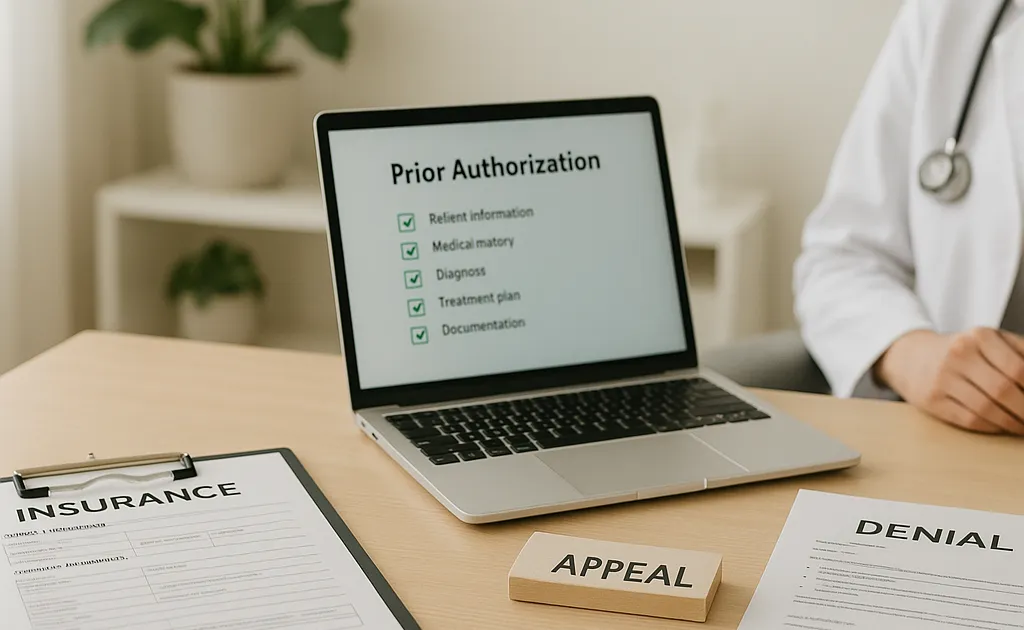
Why GLP-1 Prior Authorizations Get Denied — and What to Do Next
Insurance denied your Ozempic, Wegovy, or Mounjaro request? Learn the most common reasons GLP-1 prior authorizations get denied and exactly what to do next.
One of the most frustrating parts of GLP-1 treatment is that the clinical decision and the insurance decision are not always the same thing.
A patient may be a reasonable candidate for semaglutide (Ozempic, Wegovy), tirzepatide (Mounjaro, Zepbound), or another GLP-1 medication — but the prior authorization can still be denied because the insurer is evaluating coverage rules, documentation, and plan-specific criteria — not just whether the medication could help.
Why prior authorizations get denied
Most denials happen for one of a few common reasons:
- the plan does not cover weight loss medication at all
- the diagnosis submitted does not match the insurer’s coverage policy
- required documentation is missing
- the patient has not tried the insurer’s preferred medication first
- BMI or comorbidity criteria are not clearly documented
- the request does not align with the plan’s step therapy rules
In other words, a denial does not automatically mean the medication is inappropriate. Sometimes it means the plan excludes the benefit. Other times it means the request needs stronger documentation or a different strategy.
What insurers usually want to see
Each plan is different, but insurers often look for a clear explanation of why the medication is being requested.
That may include:
- current BMI
- weight-related medical conditions such as prediabetes, hypertension, sleep apnea, or dyslipidemia
- prior attempts with nutrition, exercise, or other structured treatment
- previous medication trials and side effects
- recent chart notes that support medical necessity
When those details are incomplete, the authorization is more likely to stall or get rejected.
What to do after a denial
The best next step depends on the reason for the denial.
If the medication is excluded by the plan, the issue may be benefits design rather than missing paperwork. In that situation, the conversation usually shifts toward alternatives, self-pay options, or whether a different covered medication makes sense.
If the denial is based on missing information, it may be worth resubmitting with more precise documentation.
If the denial is based on step therapy, the physician may need to document why a preferred option is not appropriate or whether the required trial has already happened.
And if the case is strong but still denied, an appeal may be the right move.
Why the exact reason matters
Patients often hear only that the request was “denied,” but that word can cover several very different situations.
A denial for missing documentation is not the same as a denial for benefit exclusion. A denial after step therapy failure is not the same as a denial caused by a coding mismatch.
The strategy only becomes clear once the actual denial reason is identified.
How YooshMD approaches the process
At YooshMD, insurance issues are approached as an administrative and clinical process — not just a form submission.
That means looking closely at:
- whether the patient’s plan appears to cover anti-obesity medication
- which diagnosis and chart details best support the request
- whether there is a realistic path through step therapy or appeal
- when it makes more sense to discuss alternatives rather than repeating low-yield paperwork
The goal is not just to submit something. The goal is to understand whether there is a winnable path and make the next step efficient.
Frequently asked questions
Does a prior authorization denial mean I cannot take a GLP-1 medication?
No. It may mean the medication is not covered by your specific plan, or it may mean more documentation or an appeal is needed.
Can a denied prior authorization be appealed?
Often, yes. Whether an appeal is worthwhile depends on the denial reason and the strength of the clinical case.
Why would insurance deny a medication my doctor thinks is appropriate?
Because insurers apply plan rules, preferred drug lists, and documentation requirements that do not always match the clinical decision-making process.
For more context on how YooshMD approaches treatment planning, read about what to expect at your first medical weight loss appointment or see common myths about medical weight loss.
Need physician-led medical weight loss care?
Visit YooshMD to learn about medications, treatment plans, and the practice's approach to long-term maintenance.
Medical disclaimer: This article is for informational purposes only and does not constitute medical advice, diagnosis, or treatment. Treatment decisions should be made with a licensed healthcare professional.